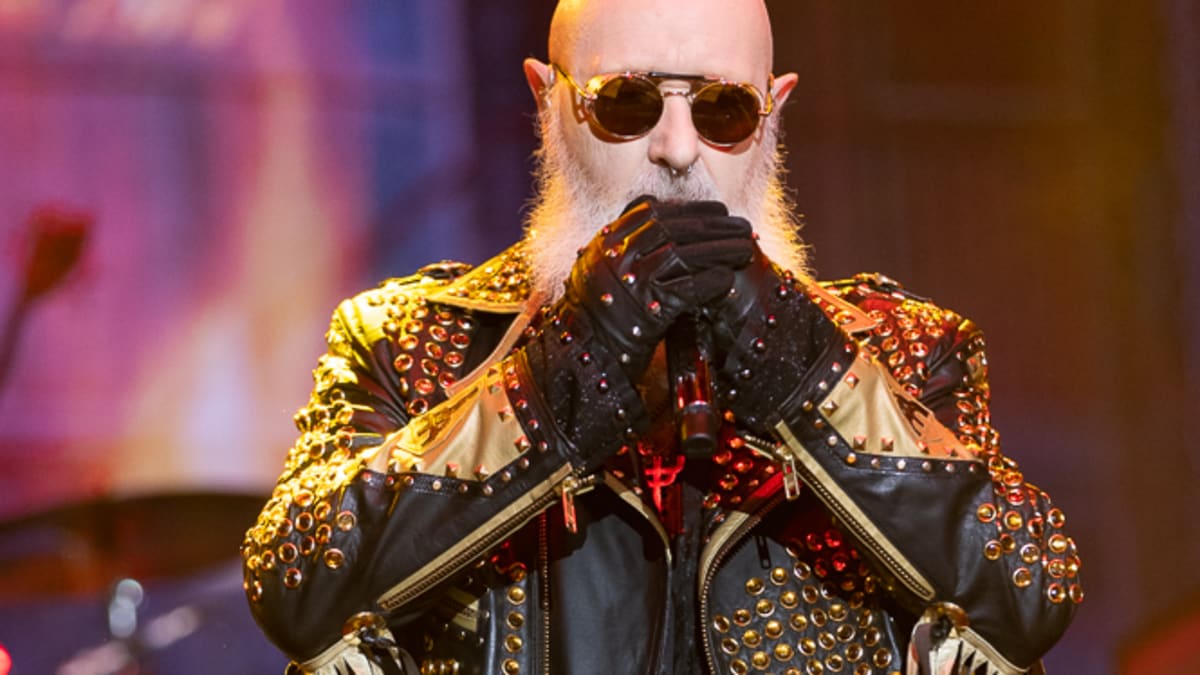
Rob Halford, the iconic frontman of Judas Priest, is celebrated as one of heavy metal’s greatest vocalists. Known for his powerful range, soaring screams, and commanding stage presence, he helped define the genre’s sound and image. With albums like *British Steel*, *Screaming for Vengeance*, and *Painkiller*, Halford earned the title “Metal God.” His influence on both music and metal culture remains unmatched, inspiring countless singers and bands across generations….
Born Robert John Arthur Halford on August 25, 1951, in Walsall, England, he discovered his passion for music at an early age. By the early 1970s, he had joined Judas Priest, a band that would soon become one of the leading forces in the burgeoning heavy metal scene. Halford’s powerful vocals—characterized by a wide, soaring range, aggressive screams, and precise control—set new standards for metal singing. His ability to seamlessly shift from melodic singing to fiery, high-pitched screams became a defining feature of Judas Priest’s sound and influenced countless vocalists that followed.
Judas Priest’s breakthrough came with the release of seminal albums like *British Steel* (1980), *Screaming for Vengeance* (1982), and *Painkiller* (1990). Each of these records showcased Halford’s vocal versatility and the band’s evolving sound. *British Steel*, with tracks like “Breaking the Law” and “Living After Midnight,” brought metal into the mainstream, emphasizing a sleek, aggressive style that combined catchy riffs with Halford’s commanding vocals. *Screaming for Vengeance* further cemented their reputation with anthems like “You’ve Got Another Thing Comin’,” where Halford’s powerful delivery became a hallmark of the genre’s anthemic quality. *Painkiller*, often regarded as one of the heaviest and most intense albums in metal history, featured Halford’s ferocious vocals that pushed the boundaries of his range and showcased a darker, more aggressive side of Judas Priest.
Beyond his technical skill, Halford played a crucial role in shaping the visual and cultural identity of heavy metal. His signature look—leather, studs, and a commanding stage presence—helped define the rebellious, powerful spirit of metal. His theatrical performance style, combined with his commanding voice, captivated audiences worldwide. Halford’s ability to connect emotionally through his singing, conveying themes of power, defiance, and freedom, resonated strongly with fans and contributed to the genre’s enduring appeal.
An important aspect of Halford’s influence is his openness about his sexuality, especially during a time when LGBTQ+ issues were less accepted in the music industry. Coming out as gay in the late 1990s was a significant act of bravery, challenging stereotypes within the heavy metal community and inspiring many fans who found solace and representation in his honesty. This courage further cemented his status as a trailblazer, demonstrating that authenticity and personal integrity are vital in the world of rock and metal.
Throughout his career, Halford has also been a pioneer in pushing vocal boundaries. His use of high-pitched screams, sustained notes, and dynamic phrasing have become standard techniques for metal vocalists. His influence extends across generations—many of today’s metal singers cite him as a major inspiration. Bands like Metallica, Slayer, and Iron Maiden have acknowledged the impact Judas Priest’s sound and Halford’s vocals had on their own musical development.
In addition to his work with Judas Priest, Halford pursued a successful solo career, exploring different musical styles while maintaining his signature vocal style. His solo albums, such as *Resurrection* (2000) and *Crucible* (2015), showcase his versatility and dedication to his craft. Despite the changes and evolution over the years, his voice remains remarkably powerful and distinct.
Rob Halford’s legacy extends beyond his vocal talent. He is recognized as a cultural icon who helped elevate heavy metal from underground scenes to mainstream consciousness. His contributions have influenced not only musicians but also the broader perception of metal as a genre that champions individuality, strength, and resilience.
In summary, Rob Halford’s role in shaping heavy metal cannot be overstated. His extraordinary vocal abilities, combined with his charismatic stage presence and fearless personality, have made him a defining figure in the genre’s history. The albums he recorded with Judas Priest, along with his influence on countless artists, continue to inspire new generations of heavy metal fans and musicians. As the “Metal God,” Halford’s legacy is etched into the very fabric of heavy metal culture, ensuring his place as one of music’s most enduring and influential figures.