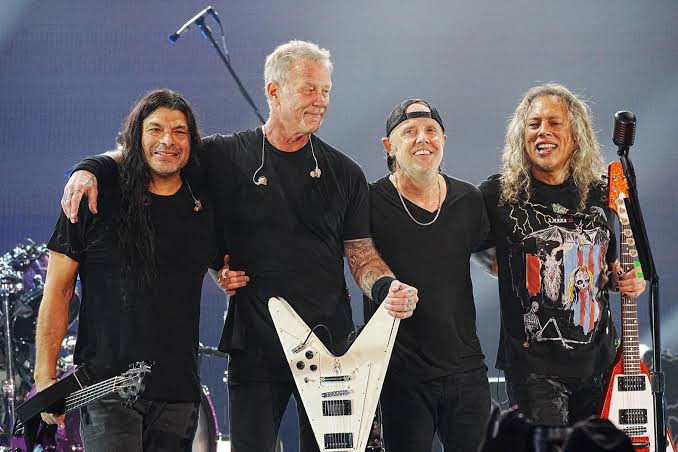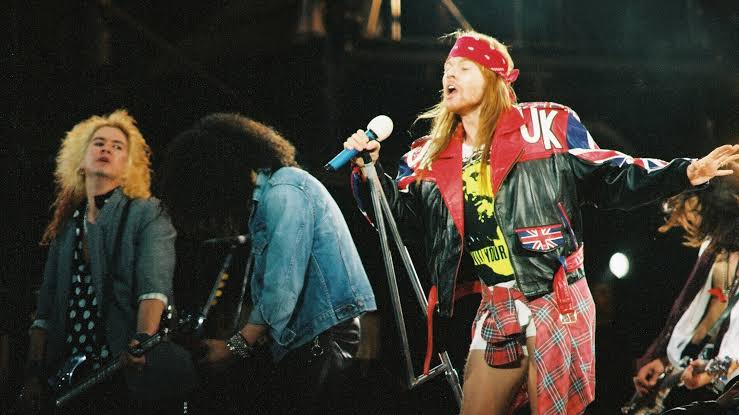
Chaos or Control? The Unanswered Rock War That Still Divides Fans: Guns N’ Roses vs. Metallica…details have
In the pantheon of rock and metal, few rivalries have stirred as much passionate debate as that between Guns N’ Roses and Metallica. Both bands emerged in the early 1980s and quickly became titans of their respective genres—Guns N’ Roses epitomizing the raw, rebellious spirit of glam-infused hard rock, while Metallica revolutionized heavy metal with their thrash metal ferocity. Over the decades, their contrasting styles, personalities, and histories have fueled a rivalry that remains unresolved, dividing fans and shaping the trajectory of modern rock.
**Origins and Divergence**
Guns N’ Roses formed in Los Angeles in 1985, capturing the zeitgeist of a city hungry for gritty, rebellious rock. Their debut album, *Appetite for Destruction* (1987), became an instant classic, blending hard rock, punk energy, and a rebellious attitude. Fronted by the charismatic Axl Rose and featuring Slash’s iconic guitar work, the band epitomized chaos—wild live shows, tumultuous internal dynamics, and a penchant for excess.
Metallica, on the other hand, emerged from San Francisco in 1981. Their early albums—*Kill ’Em All* (1983), *Ride the Lightning* (1984), and *Master of Puppets* (1986)—defined thrash metal, characterized by fast tempos, complex riffs, and darker lyrical themes. Led by James Hetfield and Kirk Hammett, Metallica cultivated a more disciplined, precise approach to metal, which contrasted sharply with Guns N’ Roses’ more visceral and unpredictable style.
**The Cultural Clash**
The rivalry intensified in the late 1980s and early 1990s, not just due to their musical differences but because of contrasting images and attitudes. Guns N’ Roses embodied chaos—rebellion, excess, and a disregard for convention. Their live shows often descended into chaos, with Axl Rose’s volatile stage presence and Slash’s rebellious persona. Their music was raw, gritty, and emotionally charged.
Metallica, meanwhile, cultivated a more serious, disciplined image. Their sound was technically precise, and their lyrical themes often delved into social issues, war, and psychological struggles. Their aggressive but controlled approach appealed to metal purists and fans seeking a more intense, yet technically refined experience.
This dichotomy created a natural divide among fans: those drawn to Guns N’ Roses’ rebellious street-smart attitude versus those who admired Metallica’s technical mastery and darker themes. The media fueled the rivalry, often framing it as a clash between “chaos” and “control,” a battle between raw emotion and disciplined precision.
**The “Clash” and Its Aftermath**
While the bands themselves rarely engaged directly in personal rivalry, their fans and media perpetuated the divide. The 1990s saw both bands reach their peaks—Guns N’ Roses with the release of *Use Your Illusion I & II* (1991), and Metallica with the groundbreaking *Metallica* (commonly called “The Black Album,” 1991). Both albums dominated charts and solidified their legacies.
However, internal conflicts, drug abuse, and creative differences tore at the fabric of both bands. Guns N’ Roses’ lineup became increasingly unstable, culminating in Slash and others leaving the band. Metallica faced their own struggles, including the tragic death of bassist Cliff Burton and internal conflicts over musical direction.
Despite these struggles, both bands continued to evolve. Guns N’ Roses experimented with different sounds, while Metallica embraced a more groove-oriented style with albums like *Load* and *Reload*. Yet, the core of their rivalry persisted in the fandoms.
**Fan Divisions and Modern Perspectives**
Today, the debate still rages. Fans often align themselves with one band or the other, citing musical prowess, cultural impact, or personal resonance. Some argue Guns N’ Roses’ raw energy and rebellious attitude make them the true icons of rock rebellion. Others champion Metallica’s technical mastery, lyrical depth, and influence on metal’s evolution.
The rivalry is further complicated by the bands’ respective legacies. Guns N’ Roses remains iconic for their rebellious image and classic hits like “Sweet Child O’ Mine” and “Welcome to the Jungle.” Metallica, meanwhile, is heralded as pioneers who shaped the very fabric of heavy metal, with albums that are considered milestones in musical history.
In recent years, both bands have reconciled their differences to some extent, touring together and acknowledging each other’s influence. However, the divide persists among fans, often symbolizing a broader debate about what constitutes “true” rock or metal—chaos or control, raw emotion or disciplined craft.
**Conclusion**
The Guns N’ Roses vs. Metallica rivalry is more than just a feud between two bands; it’s a reflection of contrasting philosophies within rock and metal music. Guns N’ Roses embody the chaos, rawness, and rebellious spirit that has defined much of rock’s rebellious image. Metallica represents control—precision, technical mastery, and a darker, more serious approach to music.
Both bands have left indelible marks on music history, and their rivalry continues to inspire debate among fans. Whether one prefers the unpredictable chaos of Guns N’ Roses or the disciplined control of Metallica, it’s clear that both have contributed uniquely to the tapestry of rock music. Ultimately, the “war” is unresolved because it touches on fundamental differences in style, attitude, and identity—making it a debate that, like great music itself, remains timeless and ever-evolving.